Responsive across devices
Mobile and desktop layouts were built to keep product browsing, navigation and enquiries usable across screen sizes.


How K-PHYNX worked on Bhutra Marble's website, technical foundation, organic search visibility, product discovery, Pinterest presence and generative-AI search visibility — with the strategy built around understanding the market first, then scaling what was working.
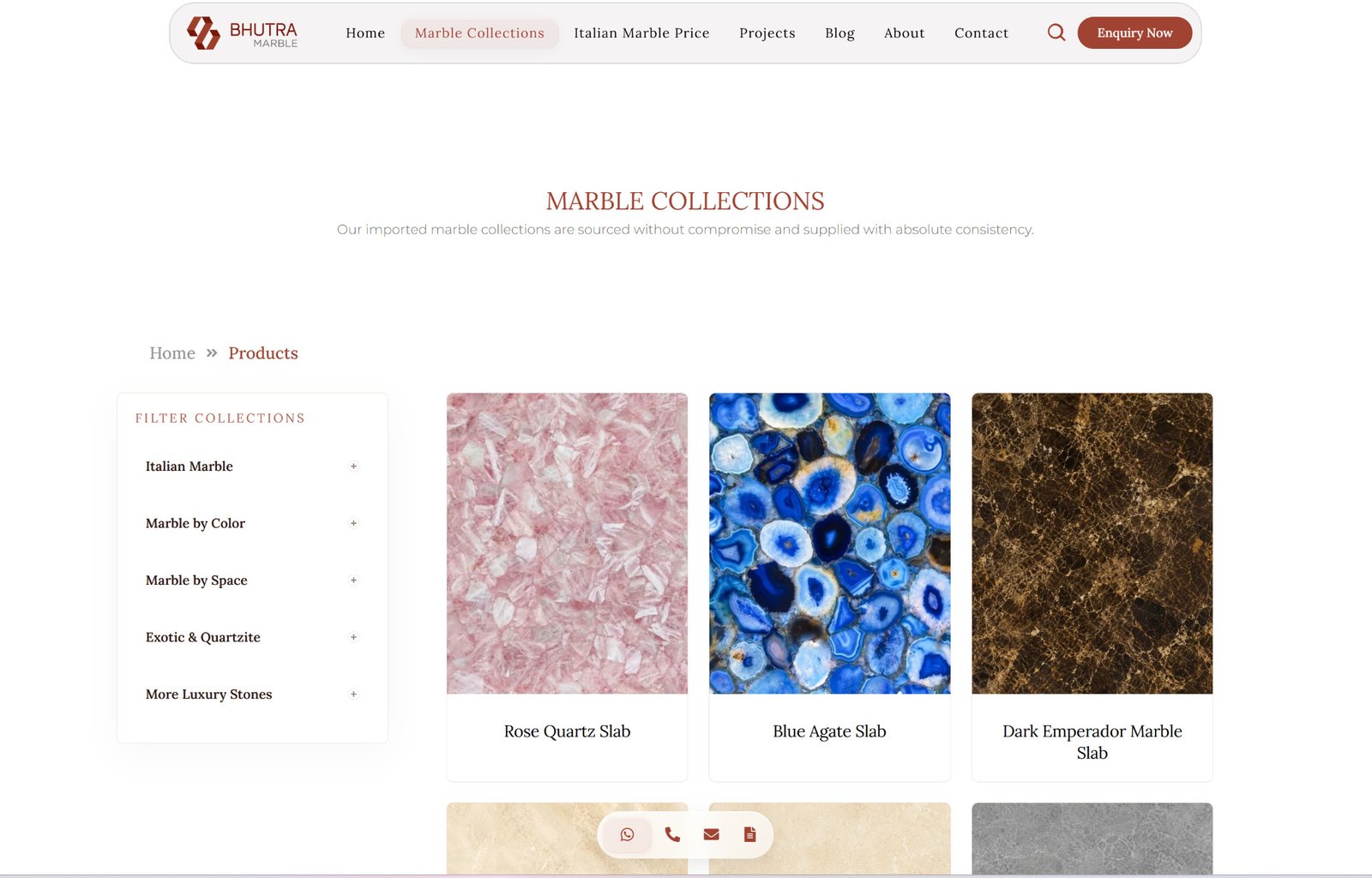
The first few months were not about blindly chasing rankings. The focus was on understanding how people discover marble, what product categories create demand, how the website should present the material, and which channels could compound over time.
Studied the marble/natural-stone search landscape, product intent and content opportunities while establishing the website's technical and UX foundation.
Created a responsive, mobile-and-desktop experience with fast-loading pages, structured product presentation, marble collections and a clear enquiry journey.
Worked across technical SEO, on-page structure, content and product discovery so the brand could build visibility beyond its existing audience.
Built visibility opportunities across Pinterest and Google's generative-AI search features — important discovery surfaces for a highly visual category like marble.
Google Search Console data for the six-month period shown below records 11.8K clicks and 927K impressions, with an average position of 8. The chart shows the search footprint building over time rather than appearing overnight.
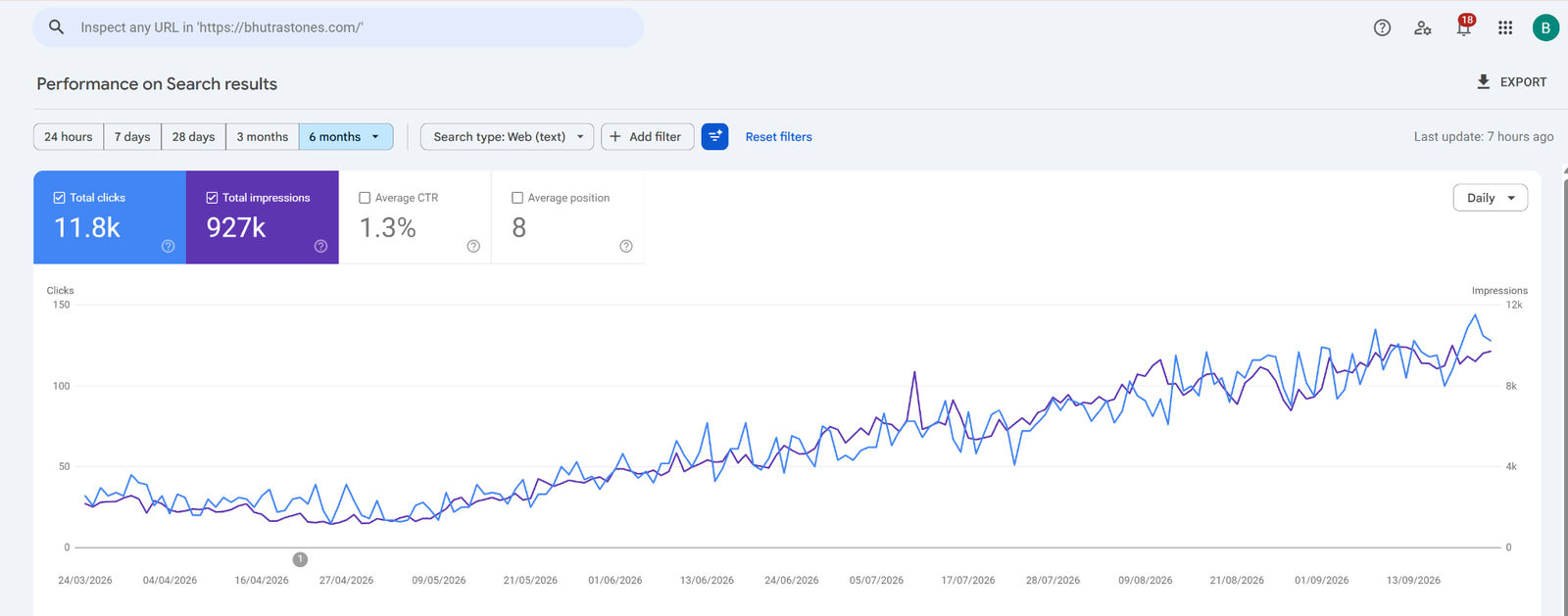
GSC view: 24 March 2026 – 23 September 2026. The visual trend shows clicks and impressions rising as the SEO foundation matured.
The website was designed around how a marble buyer actually explores material: by collection, colour, application and visual context — while keeping the enquiry path obvious.
Mobile and desktop layouts were built to keep product browsing, navigation and enquiries usable across screen sizes.
Performance was treated as part of the SEO and conversion foundation rather than an afterthought.
Product collections and categories make it easier for visitors to move from inspiration to a specific material.
Calls to action and enquiry pathways were integrated into the browsing experience so product interest can turn into a business conversation.
Merchant Center became another product-discovery layer. The screenshot below shows the last-180-day Merchant Center view, with the organic traffic series selected in the chart.
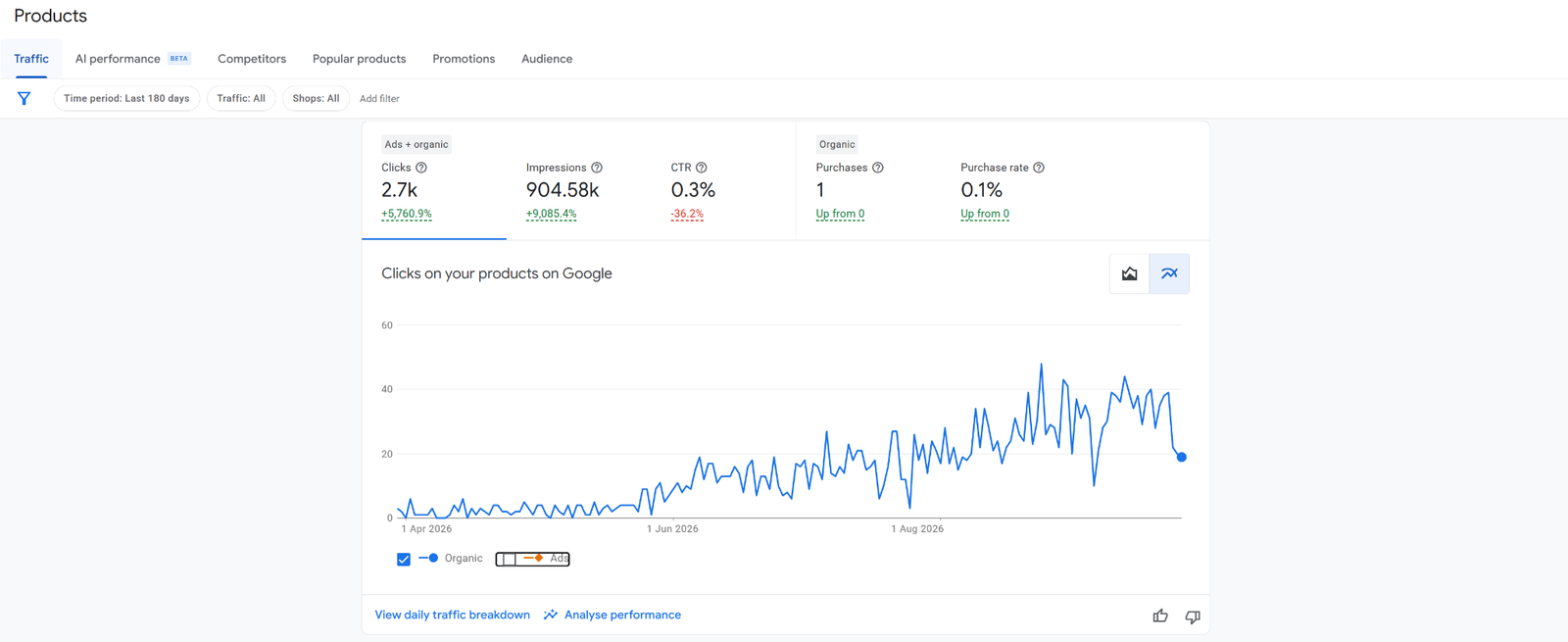
The displayed summary includes Ads + organic metrics, while the chart is set to Organic. The visible organic series rises substantially through the period.
Marble is unusually visual: buyers want to understand how a slab or stone could look on a wall, floor, kitchen, bathroom or other space. Pinterest fits that discovery behaviour naturally.
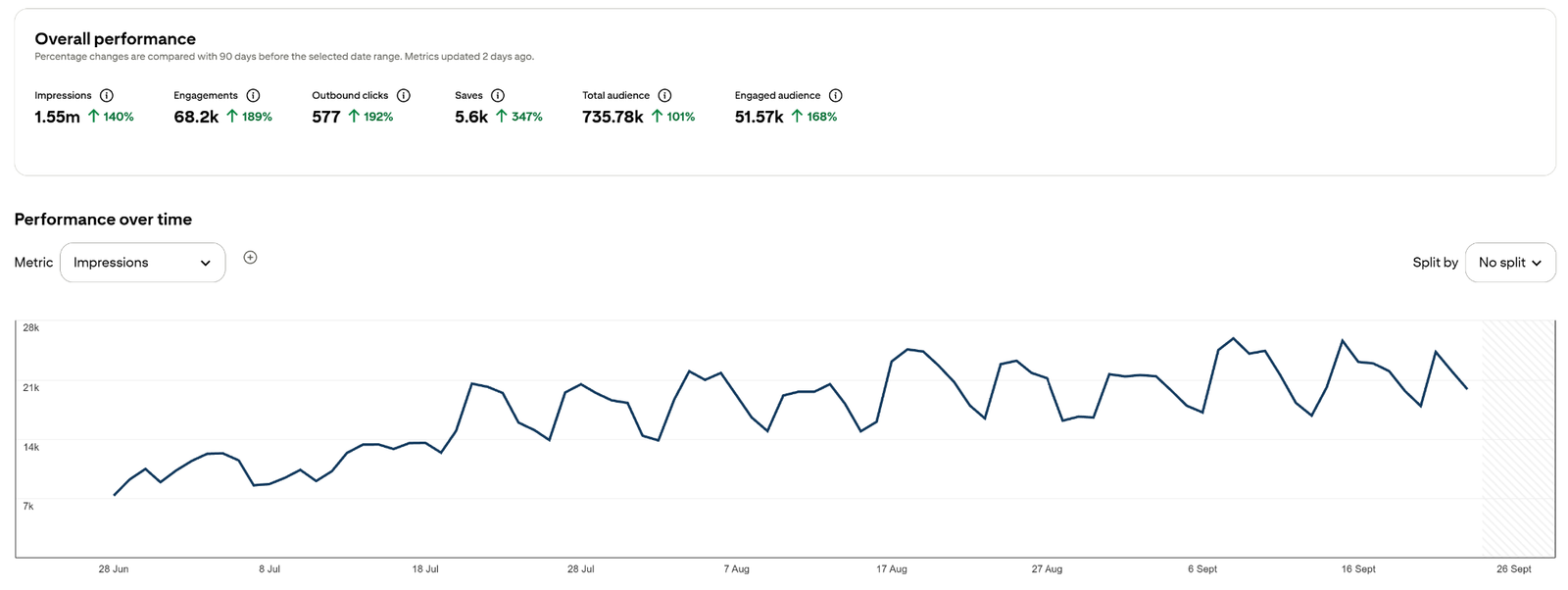
The dashboard compares the selected period with the previous 90 days. The screenshot records 1.55M impressions, 68.2K engagements, 5.6K saves and 577 outbound clicks.
Alongside conventional SEO, the work also considered answer-engine and generative-search discovery: making the brand, products and topical information easier for modern search systems to understand.
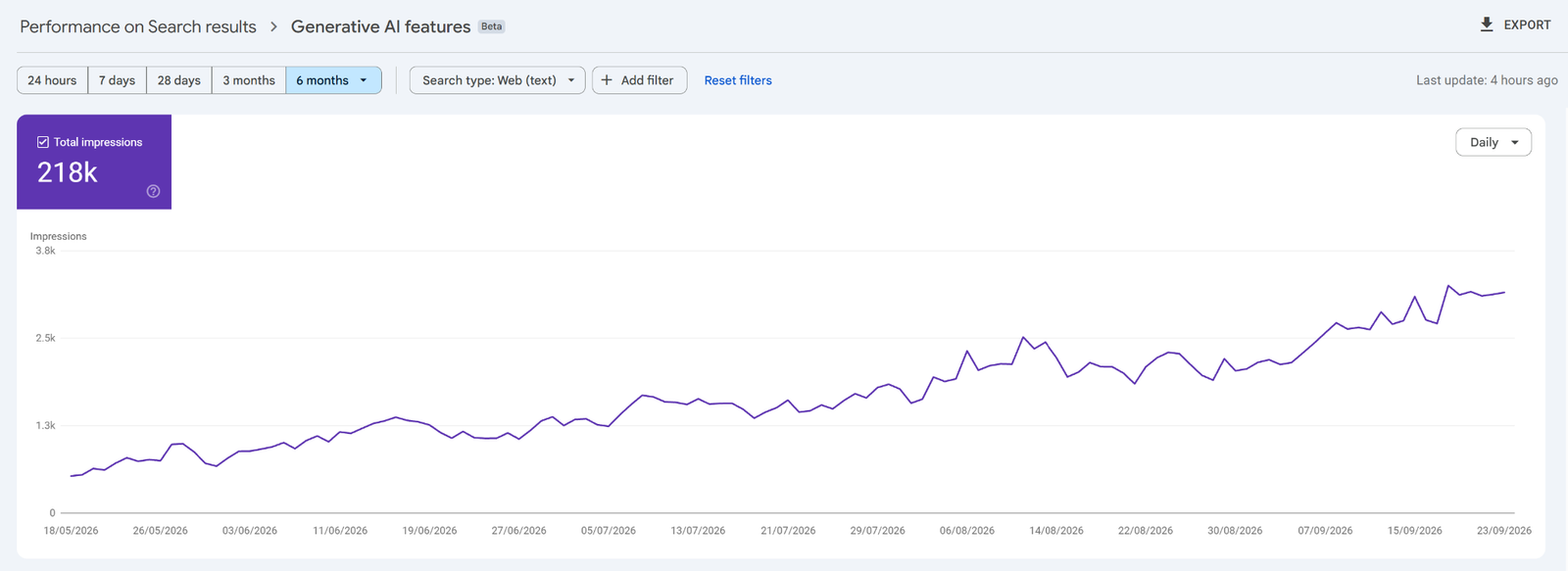
The six-month Google Search Console view shown here records 218K total impressions for Generative AI features. This is a visibility metric, not a direct count of AI answers or enquiries.
Not one lucky ranking. A connected system: website UX + technical foundation + organic search + product discovery + visual discovery + emerging AI search surfaces.
Keshav Sankhla worked on the website and SEO growth for Bhutra Marble through K-PHYNX Web Agency.
Tell K-PHYNX what you sell, where you want to be found and what the website needs to achieve.
 We respect your privacy. Your details are 100% safe & never shared.